How the Canon Is Formed
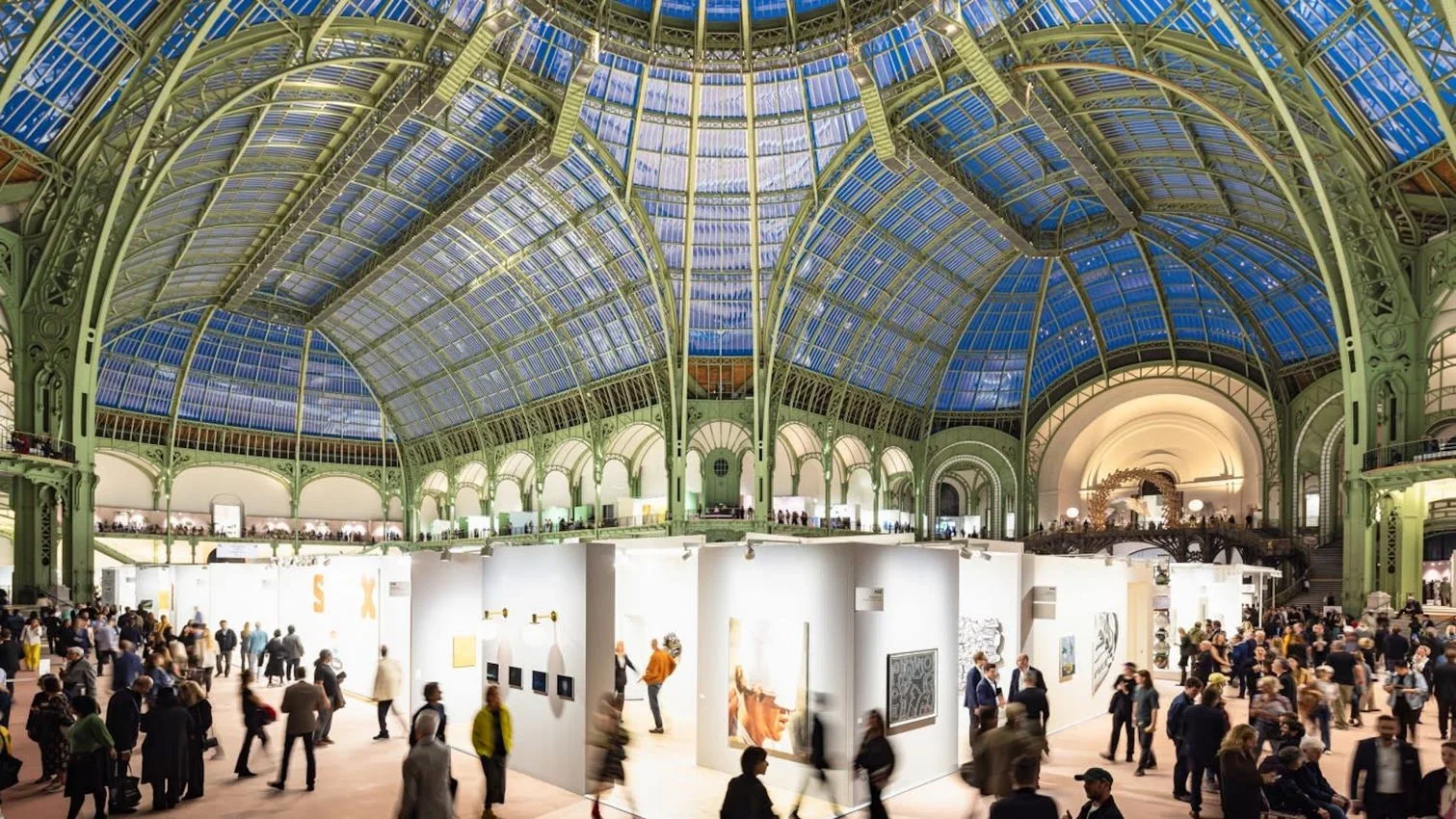
Art Basel Paris 2025
Canon paper no.7
Legitimacy, once reached, still leaves a question open. An artist's position can be genuinely secure — independently reaffirmed, generation after generation of curators, no longer dependent on any single relationship — and still not be what most people mean when they say an artist belongs to the canon. Legitimacy describes a position that has stopped being fragile. It does not, by itself, describe a position that has become historical.
The difference is worth sitting with, because it is easy to assume these are simply two names for the same achievement, arrived at by degree rather than by kind.
Louise Bourgeois's later career suggests otherwise. By the early 1990s, her legitimacy was no longer in serious question: a major retrospective at the Museum of Modern Art in 1982, a European touring retrospective through the Frankfurter Kunstverein at the end of that decade, documenta in 1992, the United States Pavilion at the Venice Biennale the following year. This is not a fragile position dependent on one curator's ongoing advocacy. It is a pattern reaffirmed, independently, by an unusually wide set of major institutions within a single decade.
And yet something kept happening after that, which is worth noticing precisely because it did not have to. Her work kept being written about by scholars who had no professional or personal connection to the people who mounted the 1982 retrospective. It kept entering curricula. It kept being folded into exhibitions organised around entirely different curatorial premises — not retrospectives of her own career, but survey shows about feminism, about sculpture, about the body, in which her work functioned as a historical reference point other artists were being read against, rather than the subject under review. That is a different kind of institutional life than legitimacy alone predicts. Legitimacy explains why her position was secure. It does not, on its own, explain why her work became something other people's work is now measured against.
This is what canon formation actually describes, and it is worth being precise about the distinction, because the word "canon" gets used loosely enough to blur it. Canon formation is not simply legitimacy that has lasted a long time. It is the process by which an artist's work stops being merely accepted within the institutional record and starts being actively used to construct it — cited as a reference point, taught as a starting position, built into the framework through which later work and later artists are understood, rather than only preserved alongside them.
The mechanism behind this is not really about the artist at all, which is part of why it is easy to miss. It depends on what museums, universities, and publications do with a body of work once it has been fully absorbed. A museum does not just hold a legitimate work in its collection; a canonised work gets pulled back out, repeatedly, into new exhibitions built around new questions, because curators keep finding it useful for explaining something else. A university does not just mention a canonised artist in passing; the work becomes part of how the subject itself is taught, independent of any particular course being organised around that artist specifically. This is a different kind of institutional use than validation. Validation asks is this work good enough to include. Canon formation is what happens once institutions have stopped asking that question and started asking a different one: what does this work help us explain.
This should immediately raise a difficult question, and it deserves a direct answer rather than a reassuring one. Is it possible for an artist to reach this position without having gone through the earlier stages — without documented legitimacy, built up over years, from independent institutions? The honest position, based on everything examined so far, is that this has not been observed. Every case that shows the pattern just described also shows a long, well-documented period of prior legitimacy beneath it. This is a strong claim, not a modest one, and it is stated as a claim precisely so it can be tested against a case that might contradict it — a artist whose work became a genuine point of historical reference without that slow, prior accumulation. The most likely place such a case would appear is posthumous rediscovery, where an artist ignored during their lifetime is taken up decades later. No clearly documented instance of that pattern has been found yet. That absence is worth stating for what it is: the current state of the evidence, not a settled conclusion.
It is also worth being honest about what this process cannot do, because the temptation to overstate it is real. Canon formation is not a verdict on artistic merit, handed down with the benefit of historical distance and therefore more trustworthy than contemporary judgment. It is an institutional process, carried out by people — curators, scholars, museum staff — operating within the same limitations, blind spots, and historical circumstances as anyone else. It explains how certain work becomes the material through which later generations understand a period. It does not explain, and should not be mistaken for an answer to, the separate and much harder question of whether that work deserved to.
This process does not happen in a vacuum, either. It happens within a set of institutions that carry their own history, their own accumulated assumptions about which regions, movements, and traditions the canon has already been built around — assumptions that shape which work is even legible as a candidate for this kind of use. What that means for artists and movements working outside the institutions that have historically done this work is the subject the next paper takes up.